
Bob Hupp Reflects On a Life on Stage
By Mary Beth Roach

As Bob Hupp celebrates his 10th anniversary as Syracuse Stage’s artistic director — and prepares for his retirement — he looks back at some of the challenges and accomplishments of the past decade and shares his thoughts on the future for the theater on East Genesee Street.
Hupp came to Syracuse Stage in 2016 from Little Rock, Arkansas, having headed up the Arkansas Rep, the largest nonprofit professional theater in that state, for 17 years. And while they loved the locale, Hupp said he and his wife, Cleo, saw the move as an opportunity to make a change.
As artistic director at Stage, he has been responsible for all the artistic work of the organization, as well as outreach and educational activities. There were several months in 2024-25, when Hupp also acted as producing artistic director, while the Stage was between managing directors.
When asked about his accomplishments and challenges over the past 10 years, Hupp chose to start with the challenges.
The COVID-19 pandemic, which hit in mid-March 2020, was the biggest, he said.
“We are still emerging from what was a complete and utter disruption to our business model,” he said. “I would say that for anybody in my field, that time period was an unprecedented time of challenge. We didn’t know what was coming next. We didn’t know if we could survive from day today.”
And unlike some of its peers, Stage didn’t have to lay off employees, he pointed out.
“Our favorite word was pivot and so we continued to pivot,” he said.
They not only pivoted; they reinvented how they produced plays and took creativity to a whole new level.
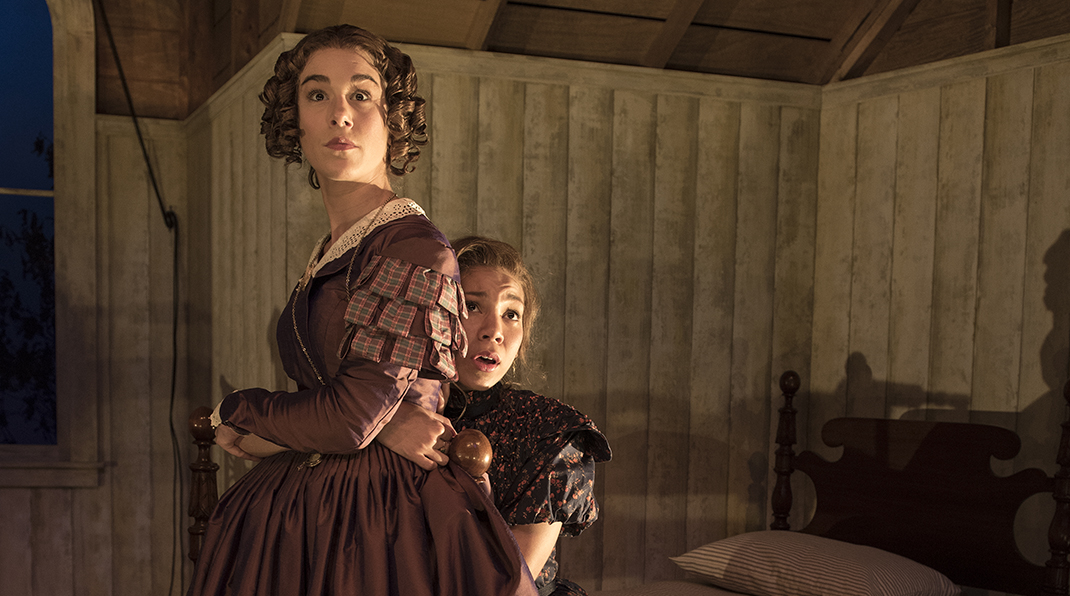
They were in the process of producing “Amadeus,” which Hupp was directing, when the pandemic broke out and shutdowns started.
Hupp recalled that they got one performance out — interestingly enough, on Friday, March 13 — and they’d been able to partner with WCNY to record their opening and closing night. They edited it and got permission to show it online. It was seen in 47 states and four countries and even the Wall Street Journal reviewed it, Hupp said. Something that never would have happened if not for COVID.
This encouraged the team to continue to create while obeying the safety protocols and then their creations were streamed during what was called its reimagined season.
For example, Hupp found the play “Annapurna,” which tells of a couple who broke up 20 years prior but then find themselves living in a Colorado trailer park. Hupp knew a couple who had an RV. They drove it to Syracuse, parked it at a sound studio and recorded the play from the vehicle.
If there was a silver lining to come out of COVID, Hupp said, it was “to really expose the resourcefulness of the folks here at Syracuse Stage, the entire team. Everybody pulled together and took what was a very difficult time and really made the most of it in an inventive, resourceful and responsible way.”
While the group learned a lot about themselves and what’s possible for theater, he acknowledged. Syracuse Stage is still emerging from the pandemic.
“We’re still rebuilding,” he said. “We are on the right path. We see our numbers. We see audience members returning. We see a response to our programming and that is positive. But it’s not an overnight fix. It’s a three- to five-year fix.”

In talking about his accomplishments, he will often recognize his team, using words like “we” and “our,” instead of “I” and “my.”
One of his greatest points of pride is the Stage’s focus on new, original
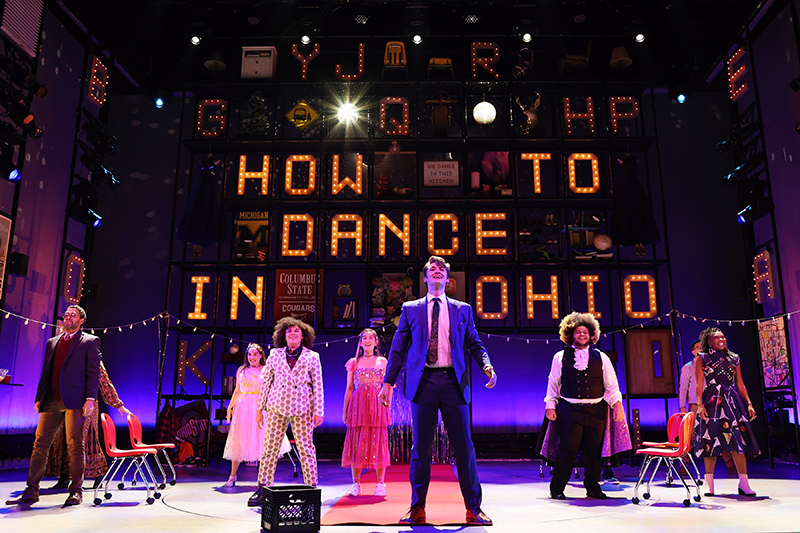
Two of those works have gone on to Broadway — “Thoughts of a Colored Man,” which opened in Syracuse in 2019 and went to Broadway in 2021, and “How to Dance in Ohio,” which was adapted from a 2015 HBO documentary. It premiered in Syracuse in 2022 and hit Broadway in late 2023.
“The fact that we have been able to create stories here in our small theater in Syracuse that have then resonated on the biggest stages in the world is something that I think our team is proud of and something that we think is an important part of the work we’ve been doing through the past 10 years,” he said.
Working with the team and sharing stories with audiences are two of the best aspects of his job, he said.
“The people that I get to work with — all the resident people that we have here at Syracuse Stage are an incredibly dedicated hard working talented group of people. We bring in dozens of people from all over the country to work here in Central New York. That opportunity to meet such creative, inventive, enjoyable people has been the most rewarding part of my job. I have the privilege of being able to bring people together, designers and actors and various creators and craftsmen. And the corollary to that is in engaging with our audience, the folks who live here in Central New York and to share our stories with them; to see 500 people come into the theater and sit in a dark room together and experience the story — there’s nothing like that. That’s thrilling.”
Shortly after becoming artistic director, Hupp said he wanted to do more community outreach, and Stage has done that in various ways with diverse populations in Central New York.
They’ve built bridges with the Onondaga Nation and last fall the organization was chosen by the Dramatist Guild in New York City for the Lucille Lortel Foundation Indigenous Theatermaker Award. Stage has commissioned Indigenous artists to create work, has hosted workshops and classes on the Nation and it has created pieces focusing on Indigenous themes.
Stage is also reaching out to the young members of the community, as well, with such programs as Theater for the Very Young, a touring group with programming for children; and the Young Playwrights Festival.
The theater too, has expanded its accessibility.
Screens have been placed on either side of the stage, where captioning is done for specific performances and they have introduced sensory-friendly performances for those “who may need to experience theater differently,” Hupp explained.
Some of these attendees might need to come and go from a performance; they might need to vocalize during the performance or use their devices. So, Stage teamed with experts in the field of autism to learn how it might be able to make adjustments to their shows.
And the play “How to Dance in Ohio” was written for and featured actors who are autistic.
“That kind of awareness and work is something that’s also been a big focus of what we’ve done during the past few years,” he said.
Stage also wants to spotlight work that tells stories of our area.
“We love these stories because they reflect where we’ve been, where we are, where we’re going and audiences have really responded to those plays,” Hupp said.
Audiences will certainly respond to an upcoming play written by Kyle Bass, Stage’s resident playwright, on the former Syracuse Nationals basketball team, who won the national championship in 1955.
Called “The Black Nationals,” the play will premiere in April of 2027 and will focus on the Black men who played on that basketball team. Central New Yorkers of a certain age will remember that that team featured Earl Lloyd, who, in 1950, became the first African-American to play for the NBA.
As to the future, Hupp is optimistic.
While they’re still rebuilding, he said they’re building from a position of strength. And he pointed to the unique relationship between the Syracuse Stage and Syracuse University, especially its drama department.
“One of the most rewarding aspects of my job is being on the campus of Syracuse University and partnering not only with the good people here in the department of drama but really being integrated into the fabric of the creative life of this university,” he said.
He firmly holds to the belief that the theater will continue to thrive while also responding to the interests and needs of the community.
“I’ve always said that our real mission is to make the most positive contribution to the cultural and civic life of Central New York. That’s what we’re here to do and as long as we can keep our eye on that ambition, that mission, then I know Syracuse Stage will do well. The people of Central New York are very supportive of Syracuse Stage, and so, I think we just need to make sure that we continue to tell stories that people find valuable in their lives,” he said.
This past June, Hupp announced his plans to retire in June of 2027, bringing the curtain down on a long and rich career. This will give Stage the time to conduct a nationwide search to fill Hupp’s spot.
What will Act I of Hupp’s retirement be?
While he said he hasn’t made any specific plans yet, especially since his wife will continue to work at Syracuse University, the couple has five kids and one granddaughter, who live throughout the country, so there will be some traveling.
“I’m still kind of evolving what life looks like for me after Syracuse Stage,” he said.