

Military Forts Celebrates America’s 250th Anniversary
By Mary Beth Roach
 As America celebrates its 250th anniversary this year, there are several battleground sites that played critical roles the nation’s history. Four nearby installations have programs planned this summer that tell their rich histories.
The individual forts’ websites have more specific information along with hours and if there are admission fees.
FORT ONTARIO
1 E. Fourth St., Oswego
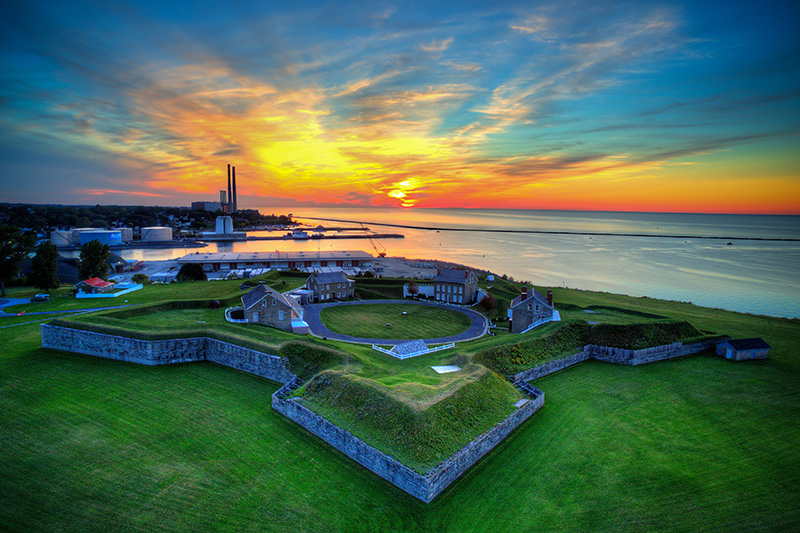 Fort Ontario, built in 1755, has had a place in every major U.S. conflict from the French and Indian War through World War II, according to Matthew MacVittie, historic site manager.
It has been attacked and burned three times; the current fort was constructed in the 1840s on the foundation of the three earlier forts. It also saw battles that were part of the War of 1812, and it was occupied by the United States Army through the end of World War II and used as a training site and active barracks.
It was also the only camp in the U.S. for Jewish refugees from 1944 to 1946.
The Safe Haven Museum, situated on the fort’s grounds, tells the story of 982 refugees. Outside of the fort is the Post Cemetery, the resting place of more than 77 officers, soldiers, women and children.
An early chapter of the fort’s history takes to the street on June 13. A large tactical showing will start at Washington Square Park and continue down East Fourth Street back to the Fort. The next day will have a smaller tactical demonstration at the Fort. Both are weather dependent as black powder will not discharge in heavy rain.
The America 250 Celebration on the July 4th weekend includes two presentations by Perry Ground, a well-known storyteller from the Turtle Clan of the Onondaga Nation of the Haudenosaunee (Iroquois) Confederacy, including one which tells of The Haudenosaunee at America 250, and one discussing the Haudenosaunee’s influence on democracy.
On July 8, the Syracuse Symphony Orchestra will perform its annual free concert at the Fort; and the Civil War Weekend, July 11 and 12, will feature the activities of garrison life, including drill, cooking, and equipment displays.
Visitors can take self-guided tours, and some must-sees include artifacts; a small theater; costumed interpreters re-enacting life from the 1860s; guardhouses; a powder magazine; a storehouse; enlisted men’s barracks; an Army office building; officer’s quarters; and underground stone casements and galleries. The ramparts can be scaled (as long as visitors stay behind the safety lines) to enjoy the sweeping views of Lake Ontario.
OLD FORT NIAGARA
102 Morrow Plaza, Youngstown
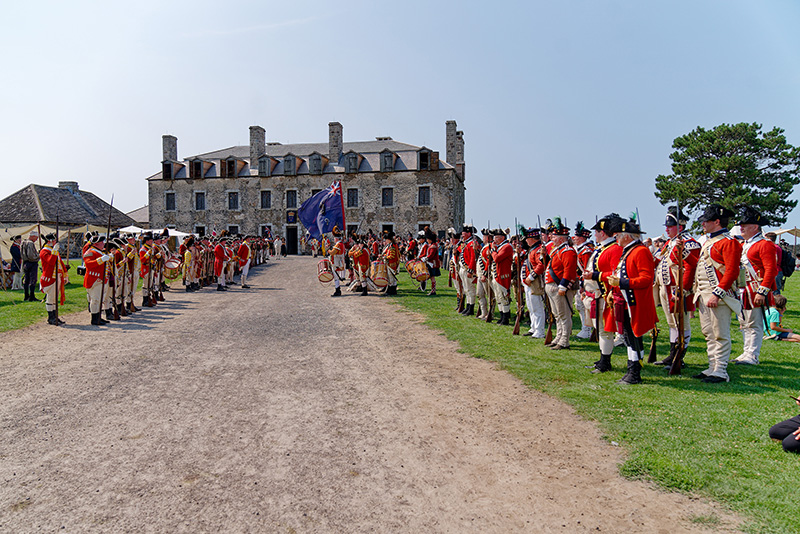 The events this season at Old Fort Niagara recreate significant points in the fort’s history, as it marks several anniversaries.
The French Castle 300 Weekend, (June 5 -7) celebrates the tricentennial of the French Castle, which was built in 1726, and is the centerpiece of the fort. The activities on June 6 will spotlight the French, Canadian and Native American influences, and include and the rededication of the French Castle by officials from the United States, Canada and France.
During the Civil War Garrison Weekend on Saturday, June 13, and Sunday, June 14, visitors can learn of the role that the Fort played in the War Between the States, with living history programs, military demonstrations, and uniform programs.
The French and Indian War Encampment on the July 4th weekend recreates the historic Siege of 1759 and how the French and Indian War gave rises to issues that fueled the American Revolution.
The fort will host Niagara County’s official America 250 celebration on Aug. 1 and 2, with a Revolutionary War encampment, musical entertainment and the county’s first light show over the Fort on Aug. 1.
FORT STANWIX NATIONAL MONUMENT
100 N. James St., Rome
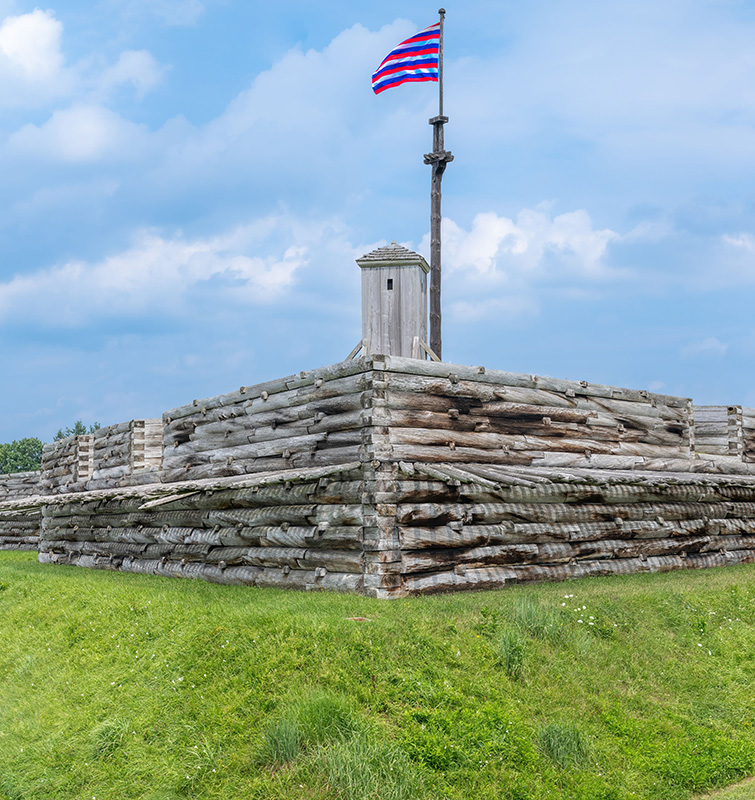 This season, several events are planned to commemorate significant eras in the history of this important installation. As the American Revolution broke out, Fort Stanwix, also known as Fort Schuyler, stood at the border of the new United States of America and defended the Oneida Carry, the largest portage in the New York waterway system, connecting the Atlantic Ocean to Lake Ontario, according to Kelly Cardwell, a park ranger and public information officer at the Fort.
To mark the construction of Fort Stanwix, there will be a special program called “Unsung Heroes Day: Gearing Up to Defend” on June 20, during which silversmiths, barrel makers, blacksmiths, surgeons, musicians and other tradesmen will demonstrate their crafts.
The fort marks “Independence Day the 18th Century Way!” on July 4, with the annual ceremony at the Tomb of the Unknown Revolutionary War Soldiers; cannon and musket salutes; and a Declaration of Independence reading.
Celebrations continue with “Honor America Day” on July 25, with a parade in the morning and an evening symphony lawn concert by the Syracuse Symphony Orchestra at 8 p.m., followed by fireworks.
Several events in August will commemorate the Siege of Fort Stanwix, which occurred Aug. 2 to Aug. 22, 1777, and would become a critical American victory in the Revolution. By ultimately defending the fort against the British, the Continental forces were able to prevent them from advancing into the Mohawk Valley and controlling the Oneida Carry. The British would abandon the fort, and this would lead to the eventual surrender by the British at Saratoga. It would become the only American post to never surrender throughout the entire war.
A commemorative event is on Aug. 2; “Futile Thunder: The Siege of 1777” is on Aug. 15, with an encampment, muskets and cannons, colonial music and stories of those who fought there. Activities on Aug. 22 will focus on what happened as the British retreated.
SACKETS HARBOR BATTLEFIELD STATE HISTORIC SITE
112 Hill St., Sackets Harbor
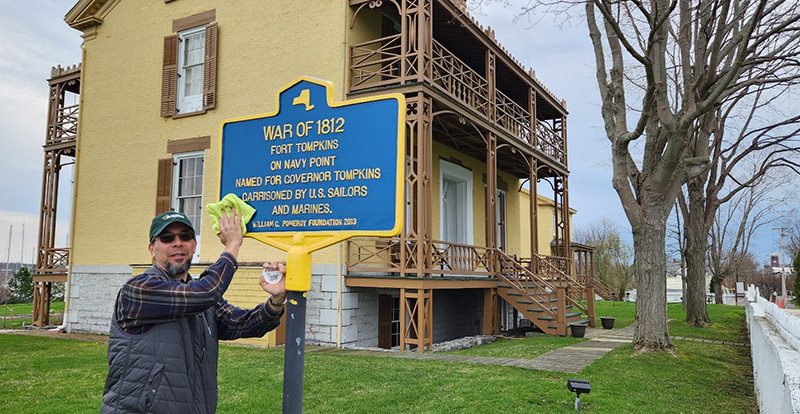 With its strategic location on Lake Ontario and its proximity to the St. Lawrence River, Sackets Harbor became a center of American military activity for that area when war broke out between the U.S. and Great Britain in June of 1812. And a plentiful supply of timber made the construction of a large naval fleet and barracks for thousands of soldiers possible. Some historical accounts estimate that as many as 3,000 men worked at the shipyard building warships.
According to the NYS Parks, Recreation and Historic Preservation website, the first battle of Sackets Harbor, on July 19, 1812, began the conflicts at the harbor, but the second battle, on May 29, 1813, became major.
British-Canadian troops, numbering about 900, along with six British ships, struck the harbor. They landed on Horse Island, and from there, made it to the mainland, in an effort to secure military supplies and destroy a warship that was under construction. Brigadier General Jacob Brown of the New York militia and 1,500 defenders ultimately prevailed. By the mid-19th century, the U.S. Navy occupied the navy yard, and the station became home to a dozen commandants, their families, and domestic servants until only caretakers maintained the property. In the 1900, the New York Naval Militia trained at the yard, and in 1967 it became a state historic site.
Events this season further illustrate the site’s story.
Native American storyteller Ronnie Reitter of the Seneca Nation presents on June 3 “The Haudenosaunee Message: The Land Speaks” at 6:30 p.m. at Union Hall, which is located on the site.
On July 4, the Navy Yard hosts “Flutes on the Fourth” at 11 a.m., and later that day, the Village of Sackets Harbor is expected to sponsor the July 4th fireworks at the state historic site property, according to Constance Barone, battlefield site manager. Playwright Craig Thornton will present “History and Acting” at 6:30 p.m. on July 22.
From July 23 to 25, there will be a special program titled “History Live: In Time,” during which costumed historical characters provide story-driven challenges connected to the site’s history, and on July 31 and Aug. 1, there will be the Early American Blacksmith’s Forge from 9 a.m. to 5 p.m. in the Memorial Grove.
Barone also noted some points of interest: Visitors can walk through the site’s history trail with interpretive panels as well as view panels in the navy yard year-round. For an admission fee, visitors can enjoy a guided tour through the commandant’s house, and the fee includes self-guide through the navy yard. Or they can self-guide the navy yard and visit two buildings with exhibits and videos. Other buildings open on site are the farmhouse with archaeology exhibits and a barn with exhibits about the War of 1812.
These sites make for nice day trips, especially for history buffs, but Bob Emerson, executive director of Old Fort Niagara, sees another key reason to study history. “If you want to be a good citizen and you want to make informed decisions, you need to know what has happened in the past you need that framework,” he said.