
The Joys of Thrifting
It’s good for your pocketbook, for the planet and it’s fun
By Marie Sherlock
 On a recent shopping spree, I purchased a High Sierra flannel shirt and a pair of khaki slacks for my husband, a beautiful cobalt blue serving bowl, two lovely tops for myself and a pair of comfy leopard-spot slippers.
The total “damage” for this consumer haul? Sixteen bucks.
Of course, I didn’t spend the afternoon at Nordstrom or Sur La Table — or even Wal-Mart. I was scoring deals at my favorite secondhand store, enjoying a beloved pastime known as “thrifting.”
Thrifting 101
For those new to the concept, thrifting is defined as “shopping for secondhand goods, as at a thrift store.”
What qualifies as a “thrift store” is the subject of some controversy. But, according to Merriam-Webster, it’s “a shop that sells secondhand articles and especially clothes and is often run for charitable purposes.”
This includes mammoth, household-name establishments like Goodwill, Salvation Army and St. Vincent de Paul. It also includes much smaller ones, frequently associated with churches and local nonprofits. Like the adorable “boutique” located in the basement of an Episcopal church in my neighborhood (Mustard Seed Thrift Store & Book Nook) or the diminutive Spay and Neuter Thrift Shop at a beach town not far from me — they’re open a total of nine hours weekly; I plan my trips there to coincide with their schedule. The smaller shops are my hands-down favorites.
Then there are The Bins—aka Goodwill Outlet Stores—where unsold Goodwill items are offered for sale by the pound. These thrifter’s paradise destinations feature neither racks nor shelves but rather huge tables or bins (hence the name) with piles of apparel, shoes, books, toys, household items and more. (The Bins are entire subcultures unto themselves. You’ll want to do your research before going. Check to see if there’s one near you at this link.)
Thrifting also includes patronizing garage, yard, rummage and estate sales. (Back in the day, my husband gave me a bumper sticker declaring, “I brake for garage sales!”)
Free is the ultimate thrifting strategy—so Buy Nothing Groups clearly qualify. These brilliant Meta/Facebook efforts, where neighbors gift each other no longer needed items, are everywhere. See if there’s one in your community at this link.
Do resale shops—such as consignment and vintage establishments and online outlets like eBay, thredUP, Etsy and Poshmark—count as “thrift stores?” How about flea markets?
Not by my definition.
While these destinations can offer good deals, someone else has done the “picking” — the searching, the rummaging, the decision-making — so prices tend to be higher. My idea of thrifting is that I play the role of scavenger and treasure hunter. That’s the fun part!
My sweet spot is on the hunter–gatherer end of the spectrum.
Think of the secondhand shopping world as a continuum. On the one end are Buy Nothing groups and garage sales and The Bins. In the middle are the nonprofit thrift stores. On the other end are vintage, resale and consignment shops. As you move along the spectrum you evolve from hunter–gatherer–”picker” to pure consumer.
My sweet spot is on the hunter–gatherer end of the spectrum.
The Many Benefits of Thrifting
This whole thrifting thing is not a fleeting fad. According to a recent Capital One Shopping Research survey, about one-third of clothing items purchased in the U.S. over the past year were secondhand and more than 25,000 resale, consignment and nonprofit resale shops now dot the country.
The business of thrifting is, not surprisingly, booming. The secondhand market went from annual sales of $20 billion in 2017 to an estimated $56 billion for 2025 — a nearly three-fold increase in the span of eight years.
What’s behind the popularity?
1. It’s good for your pocketbook
This is far and away the major reason for being a thrifter. That same Capital One survey found that thrift store patrons save an average of $2,071 annually.
While that number seems high to me, the point here is, quite simply, that buying secondhand makes dollars-and-cents sense.
2. It’s good for the planet
According to the EPA, Americans generate 17 million tons of textile trash each year. Thrifting makes a dent in that waste. Kelly Handley, a thrifting and resale educator and the author of “Ultimate Thrifting: The Complete Guide to Finding Secondhand Treasures for Less” has been secondhand shopping for over two decades. “There’s enough clothing on the planet to clothe the next six generations; thrifting keeps perfectly good apparel out of the landfill,” she says.
Buying secondhand also means that tons of other items — from couches to Cuisinarts — are recycled and reused.
3. It’s good for others
When I visit my favorite thrift shop, I know that the money — ALL of it because all of the goods have been donated and it’s run by volunteers — goes toward hunger and homelessness efforts. Money spent at Goodwill, Salvation Army and other nonprofits support other great causes.
4. It’s so much fun!
Last, but definitely not least, thrifting is a hoot. Handley calls this “the thrill of the hunt.” “It’s why I keep going back, sometimes several times per week,” she says.
Me too.
The Antiques Roadshow Effect
You’ve no doubt read about—or seen on “Antiques Roadshow”—folks who stumble upon priceless works of art at secondhand shops, like the fellow who bought a painting at Goodwill for three bucks that turned out to be a 17th century masterpiece (it sold for $190,000 at auction).
“Many thrift stores don’t have fitting rooms or allow returns, so knowing your measurements, bringing a tape measure and carrying cash all make thrift store visits easier.”
While these stories are very rare, you can, indeed, find treasures while thrifting. Here’s my (rather unconventional) story: In 1979, I bought a squirrel coat (no judgment please! I was still in my 20s and PETA had not even been founded) for four bucks at an estate sale. Long story short: my house was burglarized and the culprits absconded with my squirrel coat. The insurance agent said that the “replacement cost” of the coat would be $2,000, but my policy had a $500 limit on furs.
So my $4 find netted me $496—the equivalent of over $2,000 today.
Thrifting Tips
Are you ready to have fun saving money? If so, here are some basic hands-on strategies:
• Buyer beware. “Inspect before buying,” says Handley. Look for stains, rips and missing buttons and make sure that zippers work. I always do a quick “armpit test” too — that might sound gross but you’ll be glad you did it. Some smells cannot be washed out. And avoid “dry clean only” items.
• Come prepared. “Many thrift stores don’t have fitting rooms or allow returns, so knowing your measurements, bringing a tape measure and carrying cash all make thrift store visits easier,” suggests Handley. I’m pretty good at eye-balling apparel to determine if it will fit me—but I wear a T-shirt under my jacket–sweater so I can try tops on without the need for those elusive fitting rooms. It’s also helpful to have at least a vague “wish list” in your mind of items you’re in need of.
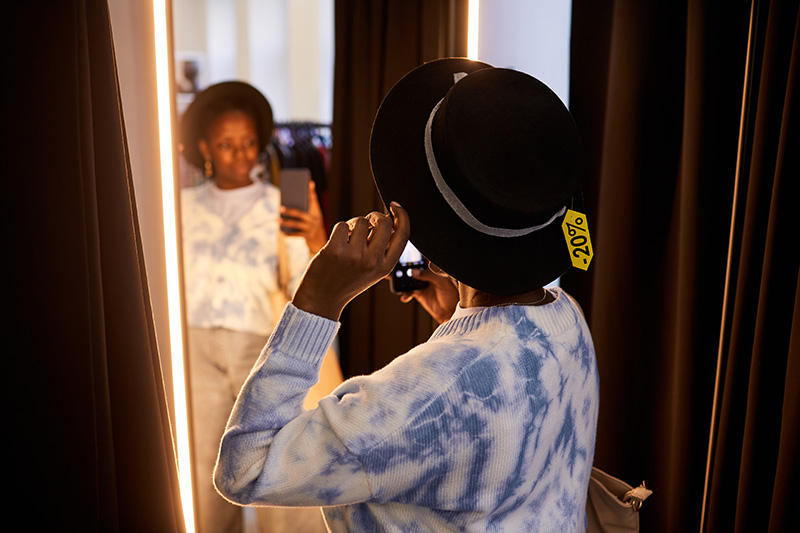
• Be on the look out for discounts. On top of already low prices, many thrift shops have frequent discount days and other promotional sales. “Sign up for store emails, follow them on social media, and donate items to get coupons. By shopping strategically you can often get discounts of 50% or more off regular prices,” says Handley.
• Have the right attitude. If the idea of wearing someone else’s clothes, eating off their (clean!) plates or reading their dog-eared books just doesn’t sit right with you, you’ll need to clear a significant learning curve before you dive in.
• A couple of myth-busters might help. “Some people still believe that thrifted clothes are dirty or of poor quality, but I regularly find brand-new items with original tags and designer pieces at a fraction of retail,” says Handley. That’s been my experience as well. And I virtually never find items that haven’t been laundered.
“Another myth is that secondhand shopping is time-consuming and frustrating. And yes, it takes more effort than grabbing something off the rack at a retail store, but that’s part of the fun,” adds Handley.
Exactly! And that brings us to our final strategy:
Have fun! Bottom line here: If you’re not looking forward to your secondhand shopping excursions, thrifting may not be your cup of tea. But if you — like me — find that you enjoy these hunting/gathering outings, take your time and savor the experience.
‘A Treasure Hunt’
For those who “take to” thrifting, it can be quite magical.
“The thrill I get when I discover an amazing find never gets old,” says Handley. “Each visit feels like a treasure hunt.”
I wholeheartedly agree.
This article appeared previously at www.nextavenue.org.