
Don’t Fall for the Latest Scam. Sadly, I Did
By Deborah Jeanne Sergeant
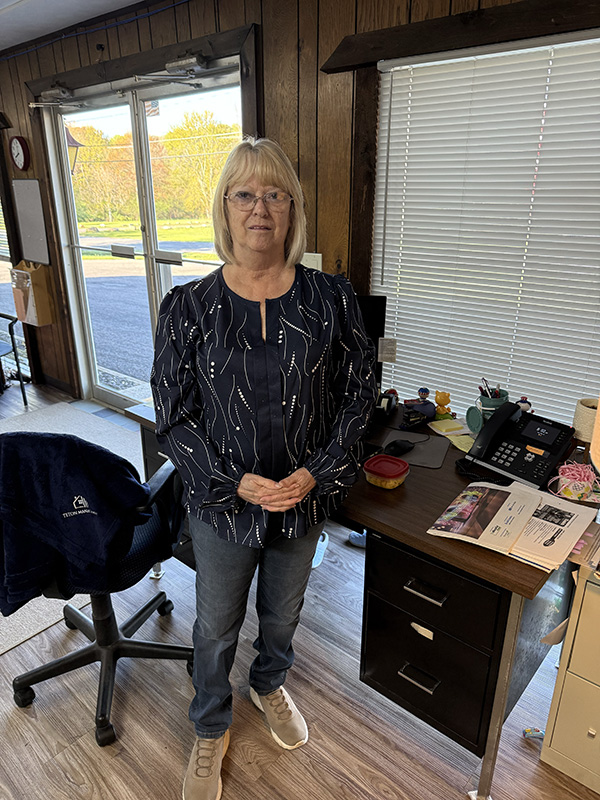
She’s savvy. Professional. Articulate. But Anne Westcott, a salesperson for 55 Plus magazine and In Good Health newspaper, is also a victim of a $1,500 scam.
It all started in mid-March, when she was trying to open Prime Video on her TV.
A message popped up, prompting her to sign in again.
Then a message appeared stating that a problem existed with her account and that she needed to call a number on the screen to have her account checked.
Westcott did so, believing it to be a legitimate message from Amazon — but in reality, scammers had hacked her TV. Not her laptop — her television.
“I called and a man answered the phone saying he was with Amazon and would be helping me,” Westcott said. “He had a whole list of questions and they all pertained to Amazon. It sounded legit and I believed I had called Amazon, so I wasn’t expecting a scam.”
More disturbing is that once Westcott spoke with him, the notice disappeared from the screen, building more credibility. Everything was restored to appear normal.
Then the person told Wescott that she had been hacked — the only true thing she heard all morning — and she would need to speak with Amazon’s cyber security division. Another “helpful” support person spoke with Westcott, supposedly analyzing whether other people were using her Amazon account. He claimed that 11 people appeared.
“Of course, I was very concerned that they may have access to my personal information,” Westcott said. “Mind you, the entire time I was on the phone they said they were working to correct any issues. I needed to stay on the phone with them.
“Eventually, he tells me we need to use the hacking service offline because of how old my computer is.”
Since her computer is old, that truth helped build more trust. But then the call got sketchy.
“He says I need to go to Walmart or wherever I can buy an Apple gift card,” Westcott said. “Yes, I paused. Then I said, ‘This sounds like the old lady scam.’ He agreed and apologized.”
But unfortunately, she went to Walmart while still on the phone line with the scammer. She read the number from the gift card, an action which the scammer said removed only four of the threats. Purchasing two more gift cards would clear up the remaining threats.
“I was told that this would be the last time,” Westcott said. “The cards are used so Amazon can verify my security and the funds are returned on the card I purchased them with or if I used cash, it would go back on my Amazon account.
 “He said that they were able to clear everything up and my service should be fine going forward. He gave me the same number again to call back if I needed to reach him. Surprisingly when I did try to call back and verify this was real — no answer!”
Unfortunately, Amazon can’t help Westcott, as the issue did not originate with them.
“I fell for it because it said it was Amazon and it was only my TV,” Westcott said.
She realizes in hindsight that she should have looked up the number for Amazon — not the number that appeared on her screen — and called that number instead.
She should have also held more suspicion about resolving a hacking issue through buying gift cards.
“Honestly, I never thought I’d fall for this scam, but I did,” Westcott said. “It’s such an invasion of privacy and the anxiety it causes reverberates into every decision we have to make. My phone rings off the hook with scammers calling every day. You can’t trust most people now. Watch your own back.”
Generally, many scammers using technology to defraud people tend to target older adults, perceiving them to be less adept at technology than younger people.
“One of the main ways an older person can protect themselves from scams is to have a code word that if it is a phone call, they can ask the caller if they are legitimate can they provide the code word associated with the account they are calling about,” said Cynthia A. Scott, president of OMC Financial Services, Ltd. in Dewitt. “They will either hang up immediately or try to provide you with your password if they have been able to secure it. This recently happened to a client.”
Scott added that many scammers include phone calls and pose as a vendor with which the victim has an account. Scammers also create a sense of urgency and that the “problem” must be resolved immediately or severe consequences will happen.
“That should be the first sign to a person that is not a legitimate call, but a scam,” Scott said. “Any request for a bank account or a social security number is another red flag. At that point, the person should respond that they need to talk to their daughter or son for their approval.”
Scott herself has received a call requesting a donation to a social organization. Instead of providing banking information, she asked for information to be mailed to her. The caller hung up, indicated to Scott that it was a scam.
Above all, never reply to a phone call, email, pop up or other types of request for personal or financial information. Instead, directly call the organization from a known number — not a number or link provided — to confirm that the contact is legitimate.