
Marketing Powerhouse Carol Eaton Retires from Visit Syracuse
She spent decades promoting Syracuse, Central New York as a destination
By Tim Bennett
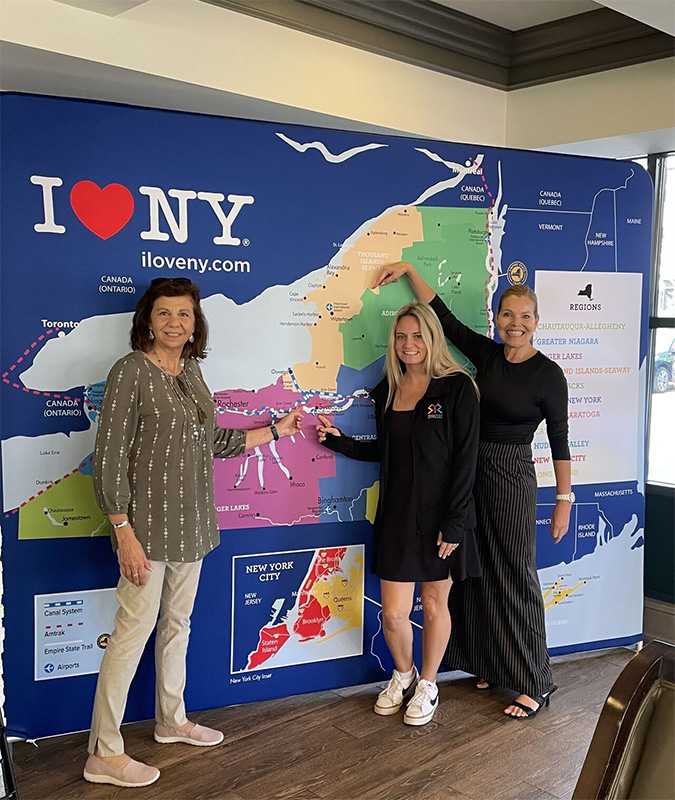
Many may not know the name Carol Eaton. But many of us have benefited from her efforts over the decades to faithfully promote Syracuse and the region through bus tours, Broadway shows, I Love NY campaigns, convention center events and creative marketing strategies such as the “Upstate Eats Trail” during COVID-19.
In 2014, Eaton was named the Tourism Executive of the Year by the New York State Hospitality & Tourism Association. Under her guidance, Visit Syracuse earned prestigious honors including the Davey Award, the HSMAI Adrian Award, and numerous “Excellence in Tourism” awards.
“Carol Eaton is the heartbeat of this organization and has been my most trusted confidant as I stepped into this role,” said Danny Liedka, president and CEO of Visit Syracuse. “She didn’t just market Syracuse; she helped our entire team redefine what a tourism office could achieve for its community.”
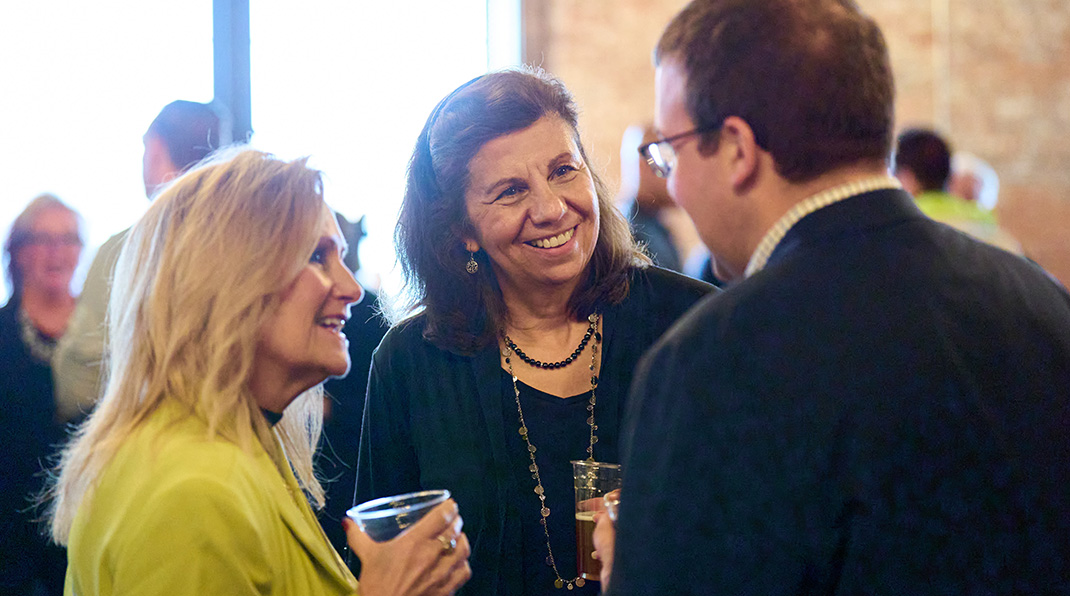
More accolades for Eaton came from Ross D. Levi, executive director of the New York State Division of Tourism, at Eaton’s retirement celebration on Feb. 5. He said, “Carol Eaton’s influence in New York state’s tourism industry stretches far beyond Onondaga County. For more than four decades, Carol has been a tireless champion for her region, blending strategic marketing expertise with a genuine passion for her community. Her warm, collaborative spirit and expert leadership have been instrumental in the growth of tourism as a vital economic engine for New York.”
The press release announcing Eaton’s retirement recapped her career path and some accomplishments: “Eaton rose through the ranks — serving as services coordinator, tourism development manager, director of marketing, vice president and, lastly, as senior vice president. She led a high-performing marketing team focused on attracting world-renowned news outlets and travel journalists, attracting major conventions that continue to return. She also greatly supported the growth of the local film and television industry (which is now Visit Syracuse Film).”
The Visit Syracuse team was so appreciative of Eaton’s contributions over the years they recently renamed the Visit Syracuse Visitors Center “The Carol M. Eaton Visitor’s Center” in her honor.
The following interview took place in a meeting room at Onondaga Free Library in Syracuse.
Q. You’ve been involved in promoting tourism to Syracuse for a long time. How did you get started on the path to what has now become Visit Syracuse?
A. I was an English communications major at Le Moyne so I was all about writing and public relations. As a junior I volunteered for the Easter Seals at an all-night softball tournament and I met a gentleman who worked in public broadcasting at the old WCNY TV station in Liverpool. I told him I was entering my senior year at Le Moyne and he offered me an internship after I graduated. But life is about connections — who you meet, where and the timing, right? Well, the TV station got a federal grant to do a national show called “Old Enough to Care” and they needed a production assistant. One of my jobs was to make sure the actors from New York City were happy and to welcome them to our area. Although this job wasn’t in tourism, my role at WCNY gave me a chance to realize how important hospitality is for visitors.
Q. So back then in the ‘80s, what would you do with them?
A. We’d do things like go to the zoo, which wasn’t the zoo we have now, but it was getting better and better. We did not have Destiny USA yet but we had some restaurant gems like Coleman’s or Hyde’s or Dinosaur — things that we thought were really cool. I also took them to the great parks we have like Onondaga Lake Park and Green Lakes. We wanted to let them know that there was a certain pride here and we wanted them to leave feeling it. But I was just a kid and I hadn’t even been to many of these places myself, so I was discovering things about my community right along with them, which was fun.
Q. How did you first get into the tourism industry?
A. When the federal grant ran out for WCNY TV, unfortunately, so did the job. It was the early ‘80s during the recession so a lot of companies weren’t hiring. I worked as a waitress at some of the local restaurants for six months. Still, that was a great opportunity to meet people, you know — and I would encourage anyone interested in public relations and marketing to take a job like that on the front lines where you are meeting your clients face to face. It’s invaluable experience. But I kept looking for a job in my field and I saw an ad in the employment section of the Post Standard printed version — remember that? It was a position for a communications associate at Cazenovia College. I wore my one interview outfit my mom had bought me, with the blue blazer and matching skirt, to the appointment.
When I got there, however, the woman at the desk said, “I’m sorry, but the dean’s already filled that position.” Since I had gone all that way I asked, “Could I still talk with someone?” She said, “Wait. Maybe the assistant dean will speak to you.” I was ushered into this person’s office and the lady said, “Well, we don’t have any openings but there is a woman at the Syracuse Convention and Visitors Bureau who’s looking for an assistant. She’s a graduate from here. Why don’t you go see her?”
I said, “Fine,” but I didn’t know what the Syracuse Convention and Visitors Bureau was. I found out later it was a part of the Greater Syracuse Chamber of Commerce, and the office was located in the lower level of the Hotel Syracuse. Long story short the woman told me that the person doing the convention services had resigned that week. But it was fate. I started off being a young hospitality industry person typing name badges for convention delegates on a bulletin typewriter. But regardless of what I did, the priority was clear — make sure everyone feels welcome.
Q. Why did the city believe they needed another convention center other than The War Memorial in the 1990s?
A. The War Memorial was originally built with the idea of having concerts and sporting events so it did not have the breakout rooms necessary for large conventions. All of our competitors along the Thruway, however, had them. I learned quite a bit about politics and convincing those in power how important certain things were to our local economy. When they started thinking seriously about a convention center, that’s when I knew that this industry was going places in Syracuse. The Nicholas J. Pirro Convention Center was built in 1992 and we were giving potential clients the “hard hat tour” before it was completed because conventions are planned years in advance. We’d hand each of the convention planners a yellow hard hat and then we’d visit the work site. I’d point in a certain area and say something like, “This is where the ballroom is going to be and this is where the breakout rooms will be.” Nick Pirro was the county executive at the time and fully on board with the project. Amazingly, it was built in one year.
Q. What kind of groups did you go for and how would you pitch our convention center?
A. The New York State School Boards Association is one. The New York State Quilters Association is another. We focused first on the state, then the region, but also national groups. But we would not be pitching directly to the associations. We would focus on the convention and meeting planners these groups relied on for their events. Our biggest selling point was our location. We were in the center of the state near two major highways, which would almost guarantee higher attendance for their events. If they chose Buffalo, attendees from New York City would have to fly or spend their whole day driving or many hours on the train. Rochester was the same. Albany is a great place for events but when the legislature is in session it’s hard to find hotel rooms.
Besides the convention center, however, we also needed a big hotel nearby because our competing venues all had hotels attached to their centers, which could give them an advantage. With convention centers you always need a place close by to put your VIPs and your exhibitors. So, a lot of the discussion around that time was, should we build an attached hotel to the center or should we redo that magnificent Hotel Syracuse, which was only two and a half blocks away. The county decided on the latter but it took until 2016 for the hotel to reopen after renovations. In the interim, our job was shuttling delegates to the different clusters of hotels at Carrier Circle, Seventh North and Buckley Road. Let’s just say we got really good at shuttling.
Q. How big was your marketing team when you started?
A. At the time it was a very small team. Remember, we were a division of the chamber. So, there was a director, two salespeople, an administrative person and a services person. I was the services person. To show how much we have grown over the years, today we have 16 full-time people and an array of part-timers. I was thrilled to be part of the team at the beginning and see it blossom into what it is today.
Q. The USBC bowling tournament at the Oncenter was quite an undertaking. Tell me about that one.
A. Yes, the professional bowling tournament was fantastic. That was one of the bigger events we had, without a doubt. But it meant transforming the convention center into a bowling “house,” a term the United States Bowling Congress preferred, rather than bowling “alley.” We had to go to Texas and bid on it, among other cities. Every other year the USBC had their tournaments in Reno, Nevada, where they had a permanent facility. On the off year, they would go to a different city. We booked the men’s tournament in 2018. In reality, it involved eight months. Two months to set up the lanes, four months for the tournament, and then two months to break it down.
As a result of the tournament and the 35,000 bowlers who participated, the hotels were constantly seeing business throughout the county and the Convention and Visitors Bureau received its funding through the hotel room occupancy tax. So, as we filled those rooms, that part of the budget grew. It was calculated the event had a huge economic impact on our area of something like $52 million.
One of the things we did in our presentation to the USBC was to show all the things bowlers could do outside of bowling. That is where we shined because if you are going to come from anywhere in the U.S., Canada or other countries, you’re going to make a vacation out of it. We never would have won the bid if we weren’t part of the Finger Lakes, close to the Adirondacks and a short drive to Niagara Falls, the Thousand Islands and Turning Stone.
Q. Do you have any plans for retirement?
A. Well, my husband and I both have roots in Hungary — through my mom and his mom, coincidentally. So, I’ve always wanted to go to Budapest. My husband retired two years ago. We don’t really have a huge plan in place. Our only plan was to take a break and then put a plan together. I’m sure I’ll also be pulled into some hospitality industry opportunities down the road, which is fine because I love it.