
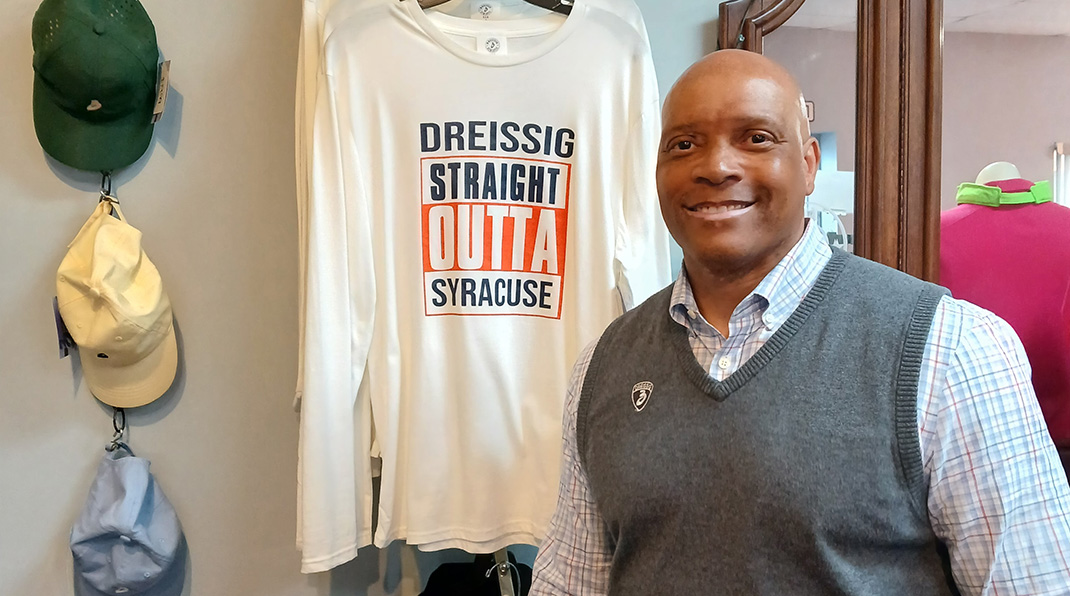
Mr. Touchdown
Entrepreneur Marc Jones reflects on his successful career as a Christian Brothers Academy football running back, his move to Canada and Germany to play football, and his decision to start an apparel company in Syracuse
By Tim Bennett
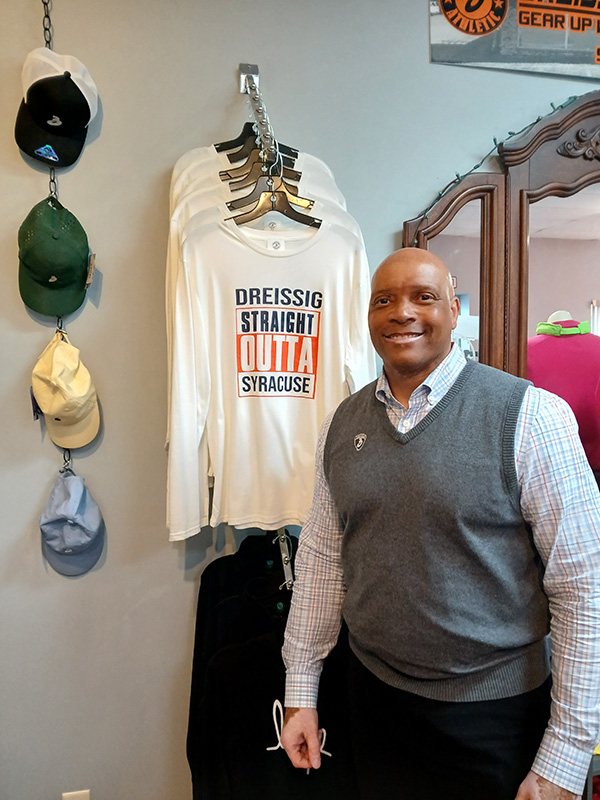
I met Marc Jones, 58, at his athletic apparel company, Dreissig, at 2002 Teall Ave. in Syracuse. I was escorted by his assistant into a small conference room to wait for his arrival. Minutes later, Jones greeted me enthusiastically with a warm handshake and a 500-watt smile.
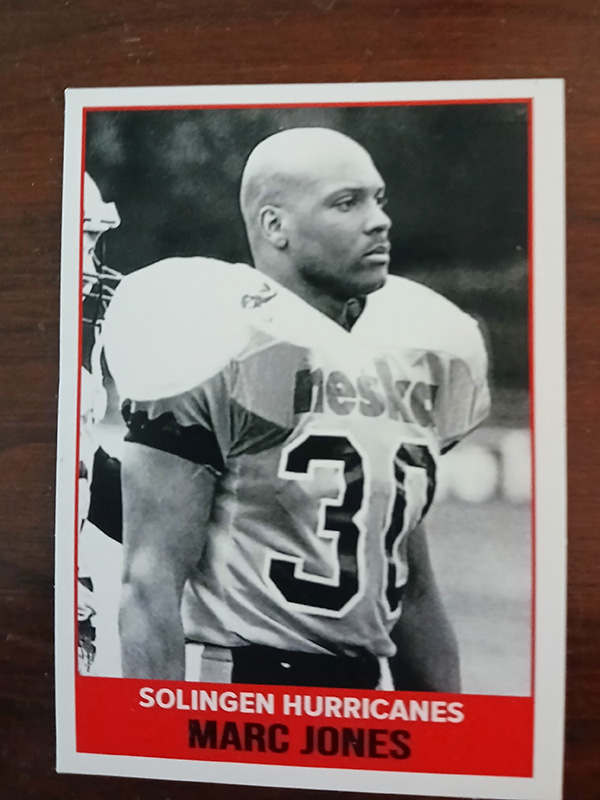
It wasn’t long before I understood how he made All-State and All-Northeast as a senior football running back in 1986 at Christian Brothers Academy in Syracuse and went on to secure a football scholarship for the University of Tennessee, and a stint with the pro German Football League for six seasons earning him the moniker, “Mr. Touchdown.” He was passionate, personal and honest — characteristics well-suited for any CEO wanting to go national with his brand.
But it wasn’t a dynamic sales personality that I witnessed that day but rather a man gifted with an entrepreneurial spirit who was not satisfied with the status quo, either in his business or in his city.
The theme that ran through his story was the principle of giving back to his community.
Jones said the “giving back” for him, initially, took the form of being what CBA calls “an angel family,” which involves giving anonymous scholarships to their students. Later, Jones said he wanted to expand his giving by co-founding the organization, The Willow Street Foundation, which gives grants to other schools and groups in the area for providing critical services to youth.
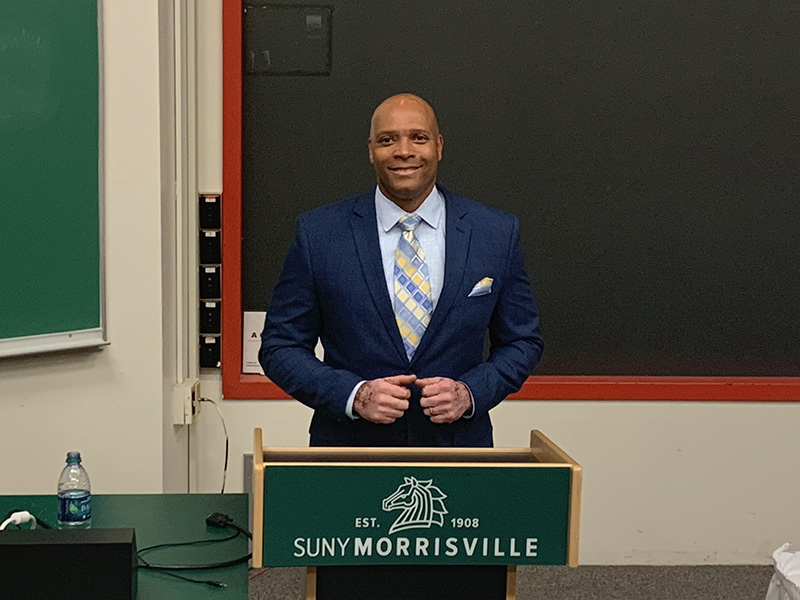
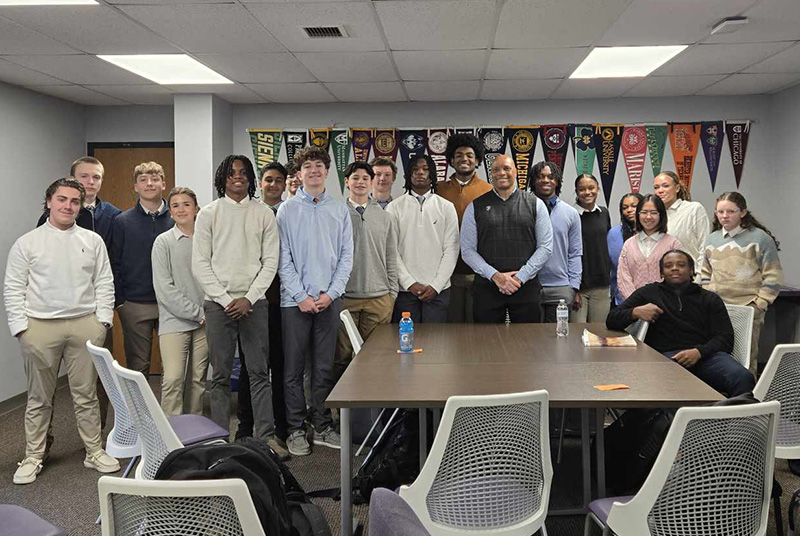
Jones also served on the CBA school board for nine years and still stops by his alma mater to encourage students to pursue their dreams and to share his path to success, not omitting some of the snags along the way.
His face lit up when he told me his daughter, Olivia, who is a sophomore at CBA, gave him a thumbs up for his CBA talks. She said, “Students come up to me and say, ‘That’s your father! He’s a great speaker!’”
Jones has been married to his wife, Carol, for 21 years. “She’s my greatest supporter and I couldn’t have done it without her,” he said. They have two children, Julian (20) and Olivia (16).
The following is some excerpts of our conversation where Jones spoke about growing up in Syracuse, Christian Brothers Academy, playing football in the GFL and starting Dreissig.
Q. Tell me about your childhood in Syracuse.
A. I grew up on the northeast side of town over by the James and Lodi area and went to public schools until the sixth grade. I was the youngest in a family of three girls and two boys. For whatever reason, my parents decided that I would be the one privileged to go to Christian Brothers Academy.
We were brought up Catholic. My parents wanted me to get the benefits of a religious education along with a strong academic program. I began at CBA as a seventh grader. At first, I did not want to go there because all my friends were going to Henninger, but I love my parents for making that decision for me.
Q. Why is that?
A. CBA gave me more structure, but it also gave me the connections that I still use today in business. I found out that there really is this special brotherhood at CBA. Like, if you need some help, you can call another brother who will help you and if he can’t, he’ll find another brother who can. I knew my parents sacrificed to send me there so I did my best in both academics and sports. My passion, however, was football. And like many teens, my dream was to play professional football.
Q. What did you major in at the University of Tennessee?
A. I majored in psychology. The reason I chose that major was the influence of my oldest sister, Michelle, who was getting her master’s in psychology at Fordham University and the influence of a teacher, Dr. Koch, who taught psychology at CBA. I fell in love with learning how the mind works and understanding how to get the right mindset to overcome obstacles.
Q. Were you thinking of becoming a psychologist?
A. Yes, but in my junior year I learned about a position I’d never heard of before. Our basketball team at the time had been having a free throw slump and they hired a sports psychologist to come in to talk with them. I didn’t even know sports psychologists existed and I was captivated. It sounded like a perfect job for me combining my two loves of sports and psychology. I looked into changing my major but it was too late. It would mean starting all over again. My school counselors told me, “Listen, Marc, finish your degree in psychology at Tennessee and then you can always go back for your master’s in sports psych later. My priority after graduating, however, was to play professional football.
Q. Now you played for the Canadian Football League for a couple of years and then for the German Football League. Tell me about those experiences.
A. The Canadian Football League was the very first league that I played in, but I ended up tearing my hamstring muscle up there. And, of course, as a running back, you’ve got to have wheels, right? It took me two years of rehab because I was a hard-headed young man and I kept going back to play too early. Finally, my agent told me, “Marc, you’ve got to take enough time off to get fully healed.”
Q. That’s interesting. You don’t hear much about pro football leagues in other countries. What was the pay like in Canada and Germany?
A. I had a guaranteed contract when I first got out of Tennessee to go up to Canada. I think it was like $50,000. But, back in the ‘90s, that was an OK salary. I was single and playing pro ball — something that I loved. When I hurt my hamstring, I came back to Syracuse. I ended up working as the director of the youth counseling programs for Catholic Charities and the Syracuse Housing Authority. That’s what I did during the day. At night I would be training two to three hours to get back in shape for football.
Then my agent calls me, and says, “Marc, I’ve got an opportunity for you in Germany.” I said, “Germany! I’m not going over there to play football.”
But he told me straight, “Look, if you sit out for another year, it’s going to be very hard for you to get back into it. Germany, by far, has the best European football league. Go over there and test your leg out. Try it for a year and then, if you don’t like it, I’ll get you back to Canada.” So, I agreed.
Q. Were there a lot of Americans playing football over there?
A. Yes, but the teams are only allowed six Americans, three on offence and three on defense. And you can only have two Americans on the field at the same time. So, in the key areas, you’ve got Americans.
The person who probably influenced me the most to go to Germany was Carroll Dale, a Hall of Fame receiver for the Green Bay Packers. I had met him through a family when I was down in Tennessee and he became my mentor. He encouraged me to play for a friend of his who had just been hired as head coach on a German team.
Q. Did you have to learn German?
A. No, the American players don’t have to speak German. Surprisingly, everything is done in English and the German players are pretty good in English.
Q. Did they also provide housing for you as well?
A. Yes. American players would get their salary but also a free house to live in and a car to drive.
Q. What year was that when you first went to Germany?
A. My first year over there was in 1995.
Q. Was it hard adjusting to the German culture?
A. I have to admit when I first got there, I had my doubts like: what did I get myself into? I’d never been overseas before. For example, when I got off that plane in Dusseldorf, Germany, I saw so many military soldiers holding machine guns at the airport, it scared the heck out of me. For the first two weeks I felt like I had landed on Mars. It probably took a month for me to come back down to earth.
Q. So, are there only German and American players in the German Football League?
A. No. Since the GFL pays the most money it attracts the best players from all over Europe. Although the German Football League only allows six Americans, they can have as many European players as they want. My teammates were from Finland, Sweden, Italy and Spain as well as Germany.
Q. How did you do your first year in Germany?
A. My first year over there was a good year for me. In fact, the papers started writing articles about me, so I was making a name for myself. When nothing opened up for me in Canada after that first year, I went back to Germany. In my second year, I broke the touchdown record for that season with 26 touchdowns. The newspapers started calling me “Mr. Touchdown.” The following year they also doubled my salary, which was nice.
Q. Would you come home during the off season?
A. Yes. I would go over there in February and then I would come back in either August or September. So, it was like a spring summer league.
Q. What would you do during those months at home?
A. Fortunately, I was able to make enough money during the season so I could focus on staying fit for the next football season. Then some parents of CBA students asked me, “Could you train my son?” So, I did that as well. My second year back, however, I focused on getting a master’s so I could maybe be a sports psychologist down the road. But they did not have a special program for that at Syracuse University. So, my plan was to get a MA in exercise science with a concentration in sports psychology.
Then, out of the blue, a guy approached me who had a clothing line called Hardcore Football. He was familiar with my football career and said he’d like to develop a Marc Jones clothing line to sell in Europe. “Fantastic,” I said, “Let’s do it.” It turned out, however, to be a big learning lesson — the guy never followed through with anything he had promised.
Q. But, you did not give up on the idea, obviously. How did you end up creating your own athletic apparel company?
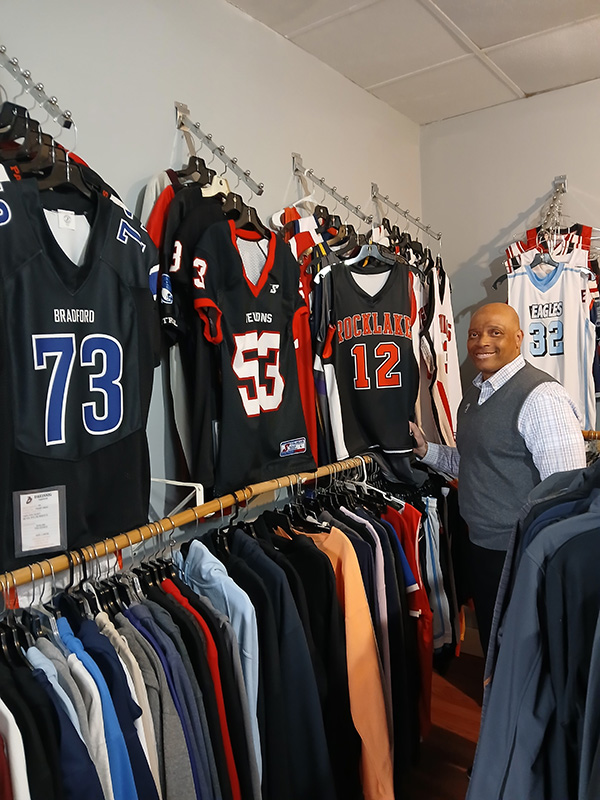
A. After that bad experience, my agent said, “Marc, why don’t you research the athletic apparel industry yourself and see if you can start your own business.” So, I researched it for about eight months and put a business plan together with the help of some business graduate students at SU. I figured I would give it five years and see what happens. I called it Dreissig because that’s the German word for 30, which was my jersey number at both Tennessee and Germany. Slowly and surely my business started picking up and I had to put the master’s aside, even though I only had a semester and a thesis left to do. But, here we are, 27 years later and the business is still going strong. So, I guess this is what I was supposed to do.
Q. I understand from other interviews you’ve done that you would like to take your athletic apparel company to a national level.
A. Yes, but I’ve had my share of naysayers, you know. The people who say, “How are you going to compete with companies like Nike and Adidas and these big companies?” I tell them, “Listen. First of all, I’m not even thinking about competing against them. My biggest competitor is me and my mindset. I want to prove to me that I can do this. I’m not trying to lock down all of these big accounts because I know I can’t right now, but I’m going to keep building on the foundation I have now and keep it growing a little bit every year. I’m OK with that.
Q. Where are your accounts now and what do you think you need to do to get to that national level?
A. We are more dominant in New York state and the Northeast and are scattered in little pockets around the country. To get to the national level is the hard part. I’ll be attending more trade shows across the country and also working with my creative directors to make us stand out from our competitors. In the next five years I am hoping to expand the business to more states.
Q. Do you manufacture your clothing in Syracuse?
A. Some of the small orders we can do here. But for the bigger orders I have them produced in a big factory in Tampa, Florida, that does custom uniforms for all the major sports. For 20 years I had them done in Knoxville, Tennessee, in a factory that my former quarterback, Sterling Hinton, turned me on to when I first started. Both of them are among the biggest factories in the country doing this type of manufacturing.
Q. Tell me about the Willow Street Foundation that you’re involved in.
A. As I became more successful with my business, I remembered how much my parents were helped financially to get me through CBA and — I’m all about community and giving back — so I wanted to raise funds, at first, to help families with students at CBA. So, I co founded the organization with one of my friends from CBA named Bob Lyons. Later, I expanded it to help students from other schools as well to make it more of a community-based foundation. We now also give grants to after school programs that specialize in mentoring, tutoring and leadership development. Right now, we support four programs: The Hillside After-School Program, The Building Men Program, Mercy Works and the Onondaga Nation. In assisting these groups, I also feel successful because I’ve noticed the more I give, the more I receive.
Q. Do you have any special fundraising events planned for this year for the Willow Street Foundation?
A. Yes. Every August we have a celebrity golf tournament. This year it’s Friday Aug. 21. I usually get some former SU athletes. And it’s a huge tournament. That’s how we mainly fundraise for Willow Street, through this event.
Q. Is there anything else you would like to say?
A. When I played pro football, as a running back, it was all about touchdowns. Today my touchdowns are closing deals with new clients and giving back to my community. Recently, I spoke to two business classes at CBA. I told them: “Playing pro football was my dream. It was something that I wanted to do since I was 9 years old. But my destiny was not to go over to Germany to just play pro football. All of that, CBA, Tennessee, Canada, getting hurt in Canada, Germany and even that first business failure, all of it was part of my journey to start Dreissig — for which I am eternally grateful. My son, Julian, who is a business major at Le Moyne College, recently told me he’d like to take over the company someday. So, we’ll be working closely together over the coming years to make that happen.