
Ron Klopfanstein: ‘My Journey to Recovery’
Host of the “Hot Seat: Media Monday” radio show discusses his recovery from chronic fatigue syndrome
By Jolene Cleaver
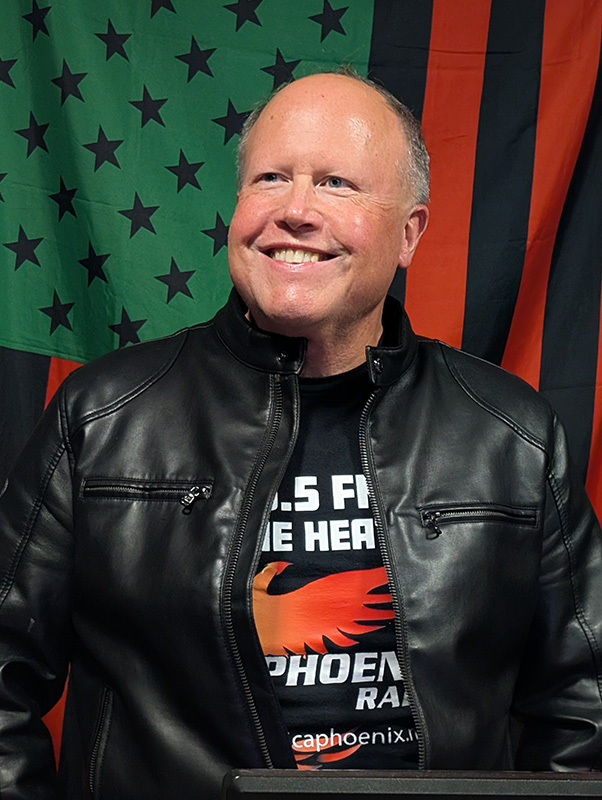 For Ron Klopfanstein, 57, a sudden illness in 2004 brought his life to a standstill.
The Westmoreland resident went from teaching college classes and pursuing his doctorate to being largely confined to bed by myalgic encephalomyelitis, also known as chronic fatigue syndrome and commonly referred to as ME/CFS.
More than a decade later, he has rebuilt his life, returning to the classroom and working as a multimedia journalist, radio host and educator.
His experience with ME/CFS, he said, taught him to define himself not by the years illness took from him, but by what he could do next.
According to the New York State Department of Health, myalgic encephalomyelitis is a chronic disease that affects multiple body systems, including the nervous system, immune system and the body’s production of energy. The Centers for Disease Control and Prevention estimates that up to 3.3 million Americans have ME/CFS, with more than 90% having not received a diagnosis.
Klopfanstein remembers the day in 2004 when he realized something was wrong.
“It was overnight. It was sudden onset. I was teaching a night class at MVCC (Mohawk Valley Community College). I went in to teach the class and I opened my bookbag and I didn’t see my textbook. And I thought that was weird. So, I went back out to my car and it wasn’t in my car. Then I came back in and looked in my bag and it was there. Like I hallucinated it not being there, which is a common thing for CFS.”
Klopfanstein remembers becoming progressively sicker during the course of that class. He went home and his husband, Jim Hale, took him to the hospital.
Doctors initially thought he had a migraine condition and after a brief hospital stay, he returned home.
Eventually, he learned he had developed myalgic encephalomyelitis, which left him uncertain whether he would ever reclaim the life he once knew.
After his diagnosis, Klopfanstein’s life changed dramatically.
“It’s like your battery is literally on zero,” Klopfanstein said. “It got to the point where I couldn’t even sit up without passing out. Because what happens is, after a while, your blood pressure gets so low.”
For Klopfanstein, the symptoms went far beyond fatigue. He developed rheumatoid arthritis, a constant sore throat and swollen glands.
“You feel like you have the flu,” he said.
He participated in a Georgetown University study and during that time received a spinal tap to release extra spinal fluid attributed to CFS, alleviating some symptoms and beginning a long, slow recovery.
A specialist in New Jersey also found that Klopfanstein had a gluten intolerance, which was addressed. His wellness journey included taking colloidal silver, which he described as a natural antibiotic, as well as exercises prescribed to help him push himself.
Over the years, treatments changed, but the illness left him in severe pain and largely confined to bed.
“My whole life ended and was replaced with sickness,” he said.
At the time of his diagnosis, Klopfanstein had been teaching, working as an adjunct and pursuing his doctorate. Within two months, all of that was gone.
Now
It took about 10 years before Klopfanstein felt able to begin pushing himself again and eventually, the condition began to dissipate.
Klopfanstein pulled his life back together. He went back to school, earned a teaching degree and returned to the classroom.
“I walked into my first high school class at age 49,” he said.
Today, he wears many hats, working as a multimedia journalist, radio host and educator.
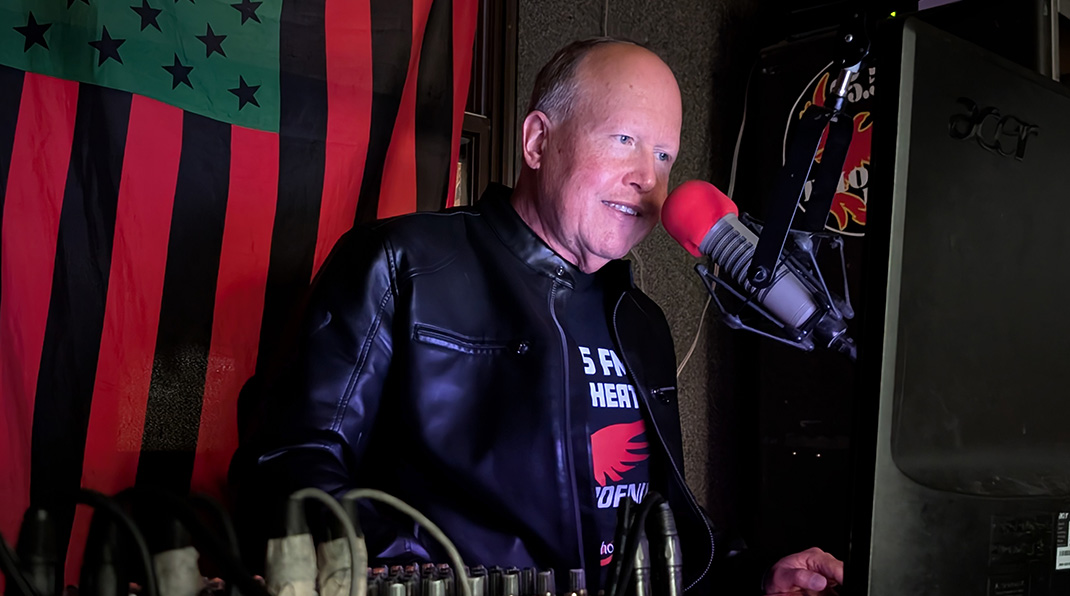
He also is the host and producer of “Hot Seat: Media Monday with Ron Klopfanstein” on 95.5 FM The Heat.
The weekly show includes a video and podcast and covers journalism, media, community stories, arts, culture and people making an impact across Central New York and the Mohawk Valley.
Looking back, Klopfanstein said the experience reshaped not only his health, but also his outlook on life.
“In the past, before I got sick, I told my story because I wanted to be a positive role model,” he said. “Now in my second life as a public figure I do it because I want people to know they should never give up, especially on themselves. Some things make life harder, being a minority, getting sick, growing older, but fighting through all that makes you stronger, as strong as you need to be.”
For Klopfanstein, finding a path forward became deeply personal. He found himself utilizing traditional and non traditional treatments.
He believes colloidal silver played a significant role in his recovery, although it is not among the treatments recommended by the Department of Health for ME/CFS.
“Oddly enough, in the early to mid 2000s, silver was being popularized as a disinfectant, antibacterial, antiviral,” he said. “The first washing machine we bought for [our] house had a tiny silver bar in it and 20 years ago they were selling Band-Aids with microscopic silver. It has to be done very carefully. There have been reports of people purposely overdosing and turning blue. But I believed it was safe.”
He said he informed his physicians about his decision.
“I believe it cured me,” he said. “So, I want people to know.”
Klopfanstein also described the years that followed as requiring enormous determination.
“It was a ton of willpower,” he said. “Just getting to be able to sit up was arduous and then when I was recovering to wean myself off stimulants, sedatives, antidepressants and 10 years of opioids [prescribed by doctors] was nothing but willpower.”
He credits his husband with helping him through the darkest years.
“It’s really important that I give [Jim Hale] credit for never giving up hope all the time I was sick,” Klopfanstein said.
Today, Klopfanstein measures success differently than he once did.
“This has been one of the most significant years of my life because it’s just under 10 years back to work and by winning awards in both my professions I guess I feel like the world is saying I officially caught up,” he said. “That took a psychological burden and I suppose a sadness, off me that I didn’t know I was carrying.”
He acknowledges he cannot reclaim the years illness took from him. But he no longer dwells on what might have been.
“Things that could have happened for me in my 30s are happening to me now in my 50s,” he said. “I’ll never know what my life would have been like if I didn’t lose all those years, but it doesn’t matter. I believe that by training my mind to accept that the only thing that matters is what’s happening now and what’s coming next. I’ll keep going and going and going.”
That perspective has become central to his life.
Klopfanstein keeps a card from one of his bodybuilding shirts that reads, “I define myself.”
“I have one on my bulletin board at home and one on the bulletin board in my classroom,” he said. “That’s sort of my motto. I’ve always been happiest and most successful when I’m doing what’s right for me and what represents who I really am.”
He said he has also chosen to define himself not by illness, but by overcoming it.
“When I started to recover, I knew I had to make an absolute choice between being bitter that I had to start over or being grateful that I had the chance to start over,” he said. “It wasn’t easy. But I’ve forced myself to think that way. If my story has a message it’s that: be grateful for what you can do, define yourself as someone who can do things, then just go do them.”
Upstate Physician: Cause of ME/CFS Remains Unknown
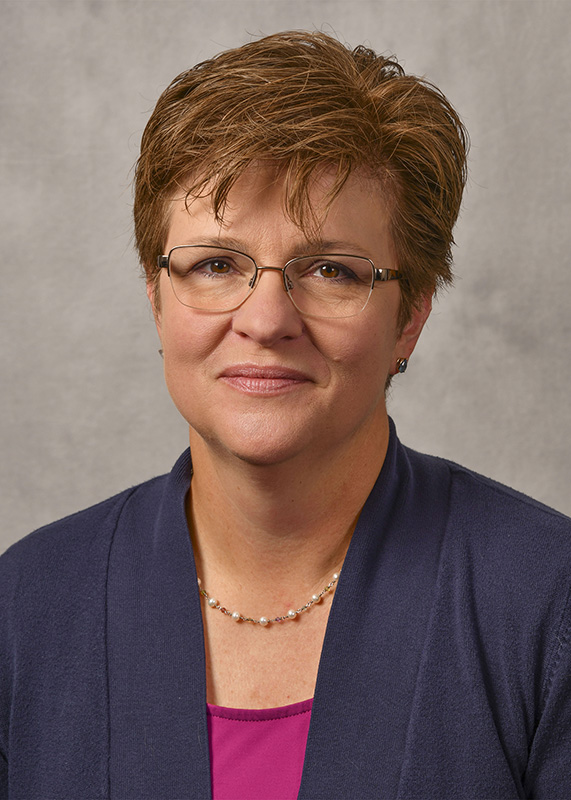
According to physician Paula M. Brooks, medical director of family medicine at Upstate Medical University, myalgic encephalomyelitis — or ME/CFS — can be particularly challenging to diagnose because there is no blood test or imaging study that makes the diagnosis.
The core symptoms are profound fatigue, worsening of symptoms after physical or mental exertion, known as post-exertional malaise, unrefreshing sleep and either cognitive difficulties, often described as “brain fog” or lightheadedness when standing.
Because these symptoms are common and overlap with many other medical conditions, patients frequently suffer for a while before receiving a diagnosis.
“If there is one thing that distinguishes ME/CFS is that patients feel much worse after exercise, where patients with other similar symptom-based diseases typically feel better,” Brooks said.
“Since the underlying cause of ME/CFS remains unknown, there is no cure. Current therapies focus on managing symptoms. For many patients, the illness can be life-altering and the lack of clear answers can be both frustrating and emotionally difficult,” she said.
Brooks said several nonpharmacologic strategies may help improve quality of life and manage symptoms.
“These include using memory aids, performing cognitively demanding tasks while lying down, utilizing blue-light filters, practicing relaxation techniques and exploring therapies such as acupuncture or massage. Medications may also play a role in symptom management. Depending on an individual’s symptoms, antidepressants, sleep medications, and medications that help regulate blood pressure can provide benefits.”
In the past, graded exercise therapy was commonly recommended, Brooks said. More recent evidence suggests it may be ineffective or even harmful for some patients.
As a result, current management often emphasizes pacing, which teaches patients how to stay within their individual “energy envelope” to reduce the risk of post-exertional malaise. By learning to recognize when they are getting close to their energy limit, patients can reduce their chances of experiencing a crash.
Tools such as activity trackers, timers and heart-rate monitors can assist patients in managing their energy budget more effectively.
“Although many patients explore complementary and alternative therapies, no homeopathic treatment has been shown in well-designed studies to be more effective than placebo for the treatment of ME/CFS. Homeopathic remedies should not be considered a substitute for evidence-based medical care and symptom management.”