

Smart Money Moves for 2027
Two local financial planners discuss the best moves right now to improve your financial future
By Deborah Jeanne Post
In 2025, about 4.2 million Americans turned 65, according to the Federal Reserve Bank. Yet 27% of households headed by someone aged 65 to 74 have no retirement savings at all.
WalletHub’s 2025 budgeting survey revealed that about 25% of people aged 59 and older do not have a budget, and of those, 73% said that they don’t because of increasing costs. It’s not because they are so wealthy that they don’t need to pay close attention to expenses.
Fortunately, it is possible to positively affect one’s finances.
As 2026 draws to a close, it’s important to make plans now to make 2027 a year that will benefit your finances for years to come.
Like a financial New Year’s resolution, making changes at the beginning of the year provides a fresh start.
We recently interviewed two local financial planners: Leyla Morgillo, certified financial planner with Madison Financial Planning Group in Syracuse, and Terri Krueger, chartered financial consultant and senior financial adviser with Orla Wealth Management in Syracuse.
We asked them what people who are 55-plus can do to set themselves up for a better financial situation going forward.
Leyla Morgillo
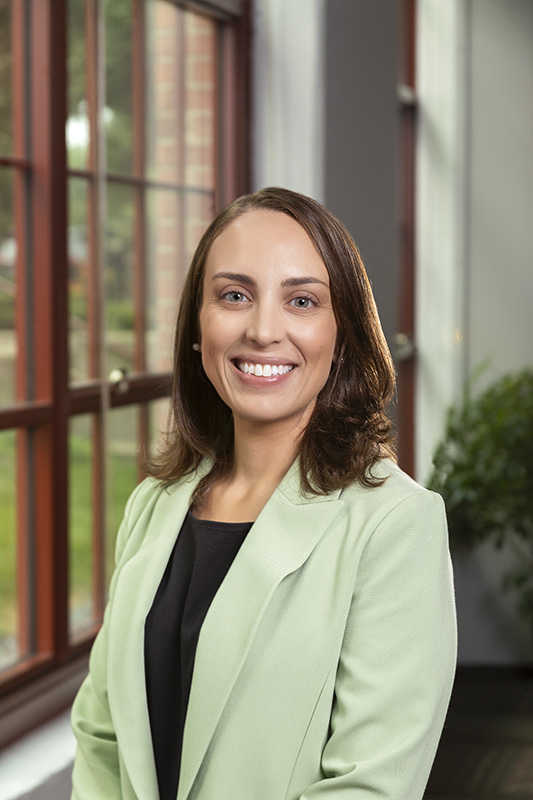 Managing volatility is essential: The years right before and after retirement are a vulnerable period
55 PLUS (55): What is the smartest money move that people who are 55-plus can do at the beginning of a new year?
Leyla Morgillo (LM): The smartest money move would be sit down and come up with a plan for the following year so that you go into 2027 prepared and avoid any unexpected surprises, particularly in terms of understanding your expenses and expected income.
55: What about retirement planning for those 55-plus?
LM: Make sure you are maxing out your retirement savings and taking advantage of the catch-up provisions. Catch-up contributions are important because they let near-retirees use their final earning years to close savings gaps, reduce taxes and create more retirement flexibility before paychecks stop. It is a “use it or lose it” provision each year so if it’s missed, there is no way to get that pre-tax savings back.
55: What about tax planning?
LM: Run a tax projection to make sure that your withholdings are on track for the year and see if there is room for any unique tax planning strategies such as Roth conversions, tax-loss harvesting, capital gain harvesting or larger amounts of charitable giving.
55: What are a few ways to improve in the area of investments?
LM: Review your investment portfolio’s asset allocation to confirm it is in line with your risk tolerance and objectives. The years right before and after retirement are a vulnerable period. A major downturn early in retirement can do lasting damage if you are withdrawing from the portfolio, so managing volatility is essential.
At a Glance
Leyla Morgillo has more than 15 years’ experience in financial planning, including retirement planning. She earned a Bachelor of Arts degrees in economics and international relations, magna cum laude, from Syracuse University. She has served as president and treasurer of the Financial Planning Association of Central New York and served seven years on its board. She is also on the board of Central New York Community Foundation and chairs the Foundation’s Development Committee. InvestmentNews recognized her in 2019 as a “40 Under 40” selecting her from nearly 1,000 nominees.
Terri Krueger
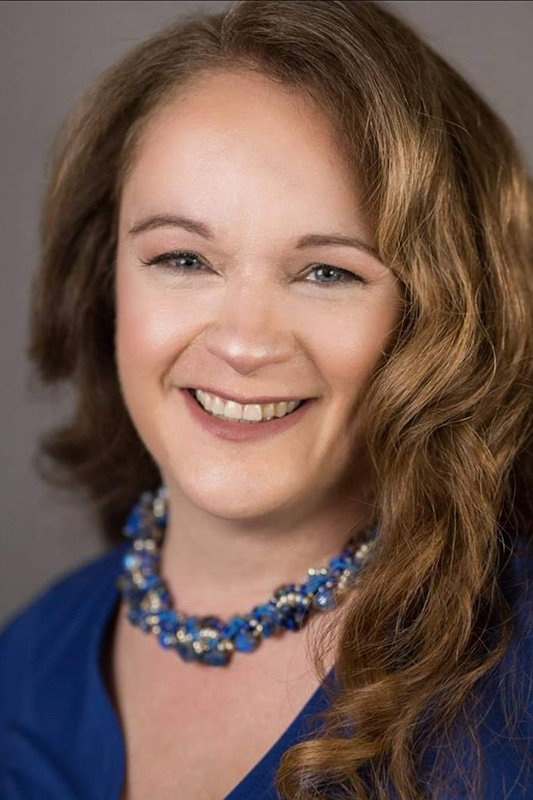 Take advantage of the tax laws as they stand today before they’re potentially taken away
55 PLUS (55): How do taxes affect those 55-plus?
Terri Krueger (TK): People should be thinking about taxes, especially if you’re around 55 years old. I’m looking at how to reduce lifetime taxes. The current administration has said with the Big Beautiful Bill that tax rates and tax charts will not change ever. It’s permanent. That’s only true until the next administration steps in and says they’re going to change it. When that happens, people may change tax brackets and they may increase tax rates. Do not rest on your laurels and think you have plenty of time. And don’t think it’s a ‘retirement problem.’ It will be your problem in retirement if you’re not taking advantage of tax laws as they sit now.
55: How does longevity figure into this issue?
TK: The younger you are, the less expensive your lifetime taxes may be, especially when people are living longer due to medical advances. Take the longevity of the oldest immediate family member and add five. There’s a potential a person can live that long. The things people passed away from in the past, people are able to have treated today.
The IRS states, ‘If you were born between 1951-1959, your required minimum distribution from any 401k or IRA doesn’t begin until age 73. If you were born in 1960 and later, your required minimum distribution age is 75. That is 4.5 years longer than it used to be and it gives a longer time for that IRA to grow to a higher balance. Every year, that required minimum distribution percent grows, based on the value of Dec. 31 the year before. At age 95, it’s 11.24%. For the longevity occurring across in this country, 11% of an untouched 401k or IRA balance will put the person in a higher tax bracket, which could mean the loss of STAR exemption and loss of any help from EPIC.
55: How does this affect inheritance?
TK: If you’re married and you leave your spouse with your IRA, that adds to theirs. Now your spouse will be paying a much higher amount of taxes based on those delayed distributions. Do a Roth conversion inside or outside the 401K. Inside your 401k, you may be protected by ERISA laws. Outside the 401k, there are more opportunities for advanced investment strategies. Talk with your financial adviser to find out what suits you best with the primary goal of finding where to do Roth conversions and when, which is a conversation between your tax adviser and financial adviser to find a plan most advantageous to you and your family. Anything that you and your spouse leave behind in a 401k or IRA, your beneficiaries must distribute within 10 years. That could have devastating effects on beneficiaries who are special needs, who may have help from the state. And for those who are not in that situation and have beneficiaries in a healthy income environment, you may push the beneficiaries to the highest tax bracket. More than one-third of what you want to leave to them can go to the government if you do nothing.
55: Do you envision taxes increasing in the near future?
TK: The One Big Beautiful Bill and the CARE Act put into play ways to recover taxes to help decrease our debt through taxes. It’s also the thinking why the next administration may increase taxes and many financial advisers think it will be true to help pay down that debt. The one thing people need to do before the end of this year and ‘27 and ‘28 is to take advantage of the tax laws as they stand today before they’re potentially taken away.
At a Glance
Terri Krueger has 30 years’ experience in banking, starting as a teller at KeyBank, where she eventually became head teller. She has multiple securities licenses (Series 6, 7, and 63) through LPL Financial and has earned the chartered financial consultant (ChFC) designation. Since 2012, she has been a qualifying member of the Million Dollar Round Table (MDRT), an association for financial professionals. She founded Krueger Advisors, LLC in 2018, which was later renamed Orla Wealth Management, LLC in 2025.