

Technology
By Marvin Druger | mdruger@syr.edu
 When I was a child in elementary school, we students sat at individual desks. Each desk had a small glass container at the right corner. I was chosen to be the ink monitor. I went from desk to desk and filled each container with ink. Students would dip an old-fashioned pen into the ink and thus be able to write on paper.
Technology has come a long way since then. The fountain pen with self-contained ink was followed many years later by the invention of a ballpoint pen that contained a revolving steel ball in a socket at the tip.
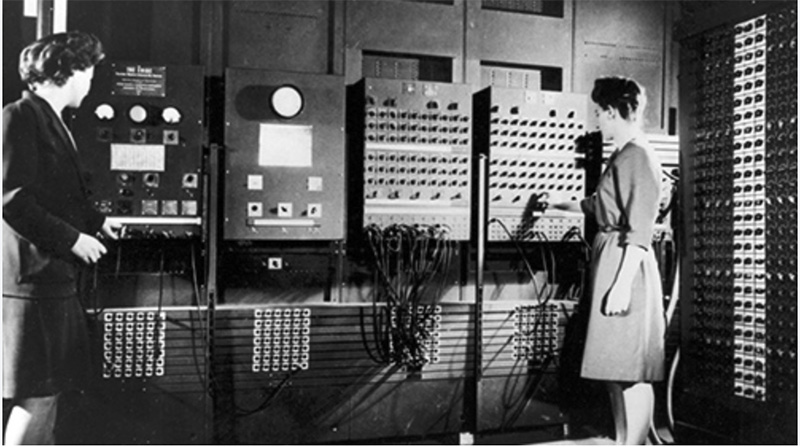
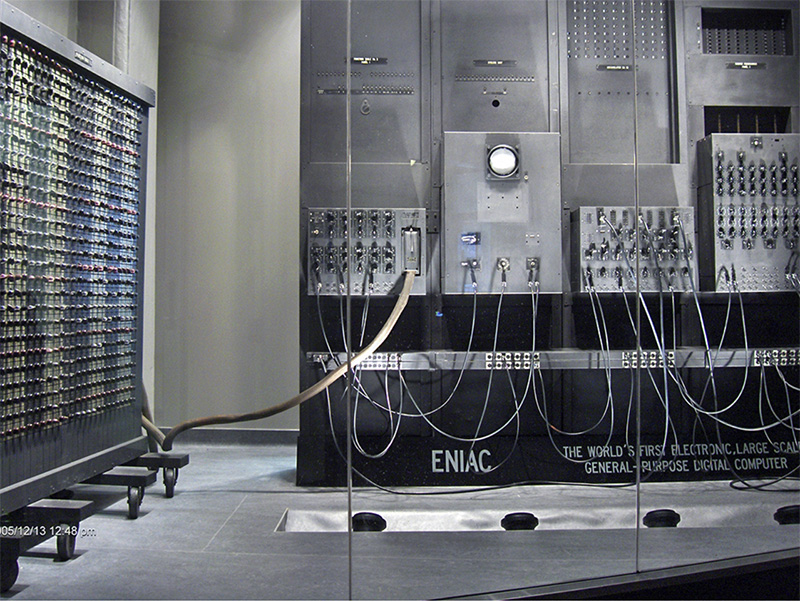
Between 1943-45 Army engineers developed the first electronic general-purpose, programmable, digital computer, named ENIAC (Electronic Numerical Integrator and Computer). Eniac was released to the public in 1946. It weighed about 30 tons, had nearly 18,000 vacuum tubes and thousands of other parts and was faster than mechanical computers. ENIAC filled a 50-by-30-foot (15-by-9-meter) room. Portable personal computers were later developed and became popular in the 1970s.
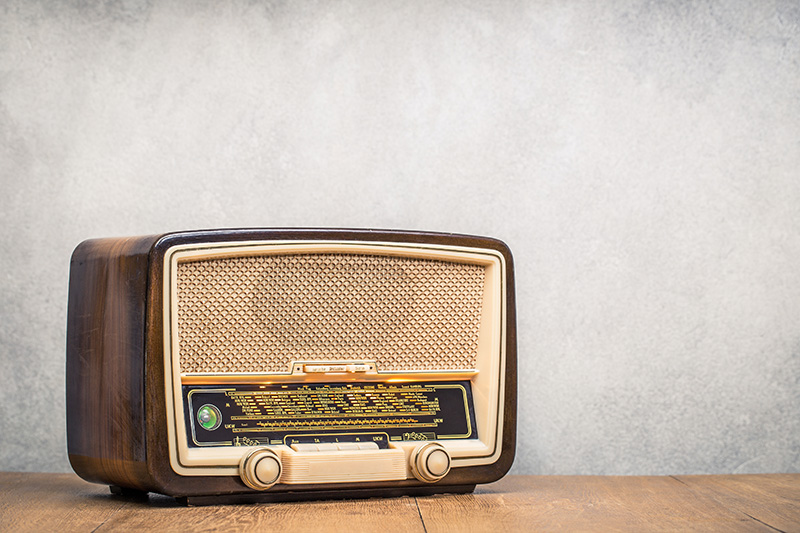
My generation also grew up with a device called a radio.
 The discovery of electromagnetic waves led to the invention of the first wireless radio system by Guglielmo Marconi in the 1890s. In the late 20th century, I remember listening to classical radio programs, such as The Shadow, Lorenzo Jones, Batman, Superman, radio speeches from Franklin D. Roosevelt, etc. I recall: “Who knows what evil lurks in the heart of men. The Shadow knows!” and “Look, up in the sky. It’s a bird, it’s a plane, it’s Superman.”
Then an amazing invention called a television set appeared on the scene. I remember holding hands with my girlfriend, Iris, watching the Milton Berle show on a tiny screen in black and white. The screen was mounted in a large cabinet. Color was later added to this TV miracle.
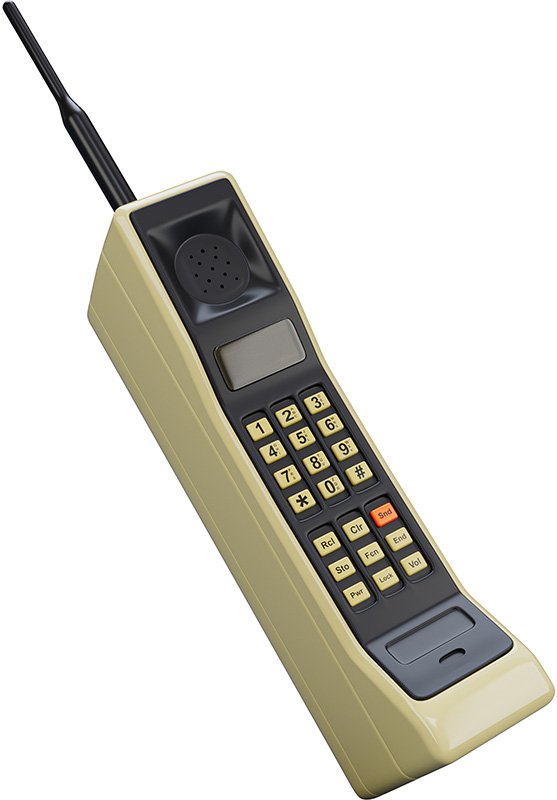
Many other communication technologies were developed. The first handheld mobile phone was developed by Martin Cooper, an engineer at Motorola Corporation. The phone weighed about 2.5 pounds and looked like a large brick. In 1973, in New York City, Cooper made the first mobile phone call to a colleague.
Eventually, the cell phone was invented. I was totally amazed that a pocket-sized device could use radio waves and enable me to call someone while driving in my car or find out that Albert Einstein died at age 76 of a burst aortic aneurism.
 The cell phone has become an indispensable device for communication. The world has become totally dependent on the cell phone. It can be used to communicate, take and store photos, find information and for many other purposes.
I taught an estimated 50,000 students in my role as a faculty member in biology and science teaching career at Syracuse University. When people ask me what changes I have observed over a span of teaching that started in the mid-1950s, I immediately respond: “Technology.” Almost everyone has a cell phone and uses it incessantly, especially the younger generation. Text messaging, emails, Facebook, Instagram, etc. are constantly used for communication.
I was composing an email to send to a colleague who had his office next to mine. Suddenly, I realized that he was right next door. I went into his office to tell him my message — in person. How unusual.
 I am not very interested in using new technologies. If my computer breaks, I can simply ask a 10-year-old child to fix it. I discovered that the simplest way to repair my computer is to turn it off, wait a few minutes and turn it on again. That usually fixes the problem. I use the computer mainly to write articles in Microsoft Word, use Google to find out information and send emails. I almost never use Facebook, mainly because I am not really interested in finding out about someone’s trivia.
However, I am amazed at artificial intelligence (AI).
I have consulted with Claude several times and have gotten immediate, helpful advice about different issues. I was telling a friend about Claude and how she was so personable, knowledgeable and helpful. He reminded me that Claude is not a “she.” Claude is an “it!”
 I am particularly disturbed about the current uses of technology on the telephone. When I make a phone call, I want to speak to a real person, not a robot or AI. But current practices are not likely to end soon.
I am annoyed when an unsolicited email asks me if I am a robot. I always say “No,” but I am tempted to say “Yes,” just to see what happens. What are the consequences if I am indeed a robot? Robots often answer the phone when I make a phone call.
I have a Ph.D. in science and I think I can learn about the new technologies. In fact, I believe most people can learn ANYTHING they want to learn IF they really WANT to do so. I don’t have the least bit of interest in learning how to use new technologies, but I have become completely dependent on my cell phone.
The other day, I couldn’t find my cell phone. I panicked. I was told to have someone call my cell phone number to locate it, but I heard no ringing. I traced my steps to a driveway outside my living facilities. I found the phone lying in the driveway, Fortunately, no car had run over it and smashed it. The information on the phone is retrievable, but doing so is a nuisance.
I guess we will have to adjust to new technologies. I’m sure many people of my generation feel the same way as I do about technology. I long for the old days when people spoke to each other in person and filled the ink wells regularly.